Member Spotlight
The PMSA Member Spotlight highlights members who are making an impact in pharmaceutical analytics; from rising professionals to experienced leaders shaping the future of the industry. Through a short set of profile questions, members share their professional journey, perspectives on data and innovation, involvement with PMSA, and insights on the future of the industry.
Members are invited to self-nominate by completing the submission form. Selected members will be featured on the PMSA website and our LinkedIn page. Know someone who would be a great feature? Share the form with them and encourage them to submit their own spotlight.

Nathan Corder
PMSA: How many years have you been in the industry?Eight years
PMSA: What attracted you to the field?
I ended up in pharma by coincidence. I was working on a PhD in Statistics at the time and happened to have quite a bit of work experience in SAS programming. A local hematology start-up came to our department asking for any student who could work part-time to assist them with QC work on a filing with the FDA. The only conditions were 1) they had to know SAS and 2) they had to be able to start RIGHT NOW! I knew I didn’t want to stay in academia, so I applied. That part-time role in the bio-stats group turned into a full-time position in the commercial analytics team when the drug got approved, and I’ve been in the industry ever since.
PMSA: How did you first hear about PMSA?
I found PMSA organically a few years ago when my team and I were looking to plan out our year’s conference attendance calendar. The PMSA Annual conference happened to be very close by that year. Most of us have academic backgrounds, so this was one we hadn’t encountered before. It was nearby that year, and so we decided to attend. While we still focus on maintaining our academic conference coverage, given the unique perspective PMSA offers, we’ve made it a priority to include PMSA in our list of major conferences too.
PMSA: How many years have you attended the PMSA conference?
This year will be my fourth year.
PMSA: Please describe any current projects you are excited about.
About a year ago I transitioned out of our commercial analytics team and am now supporting medical affairs. Many of the questions are fundamentally the same but with the increased regulatory requirements, medical affairs isn’t able to answer the questions the same way. How do you do promotional mix modeling (MMx) when 1) medical affairs is inherently non-promotional and 2) all of your legacy commercial endpoints (like brand TRx/NBRx) are impermissible model endpoints? Finding a solution that is simultaneously estimable, feasible, and permissible has been a fascinating problem to pursue.
PMSA: Do you have any predictions for the future?
Last year, two major manufacturers entered the space of direct-to-consumer distribution. I don’t think it’s a stretch to think more companies may follow suit in the coming years if it is the right thing for their brands and the patients they support. What I think that will lead to, though, will be a significant disruption in the ability for open claims data to capture the extent of coverage within markets that have major DTC distribution. At that point, it would not surprise me if data vendors from the logistics market stepped in to fill the hole that the disruption in reimbursement claim data has caused. Imagine buying data from Amazon or Walmart or UPS that augments your claims data based on the fulfillment of product (as opposed to the prescribing of it). Depending on how much volume goes through these new DTC distribution channels, I can foresee our analytics environment having to get quite creative if we are going to attempt to retain the same data capture rates we have presently.
PMSA: What are your hobbies?
As anyone with kids under 5 will probably agree, “hobbies” are really something you aspire to more that “have” for a little bit. I’m right in the thick of that, but I will say, the one hobby I have been able to keep ahold of has been cooking. I’ve even been able to start involving my older daughter in the kitchen with some of the non-knife prep work. I like to think it’s cooking with dad that has led to her asserting on multiple occasions that her favorite food is broccoli.
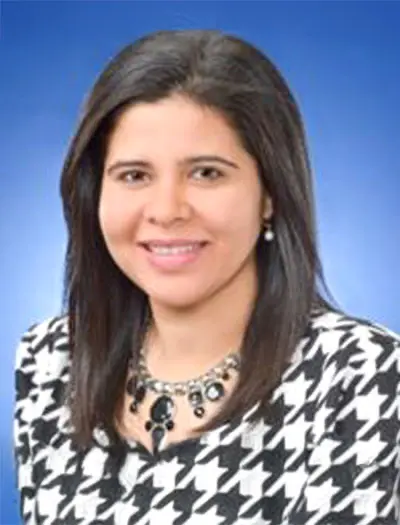
Hetu Gadhia
PMSA: How many years have you been in the industry?I have been in the industry for 12-15 years.
PMSA: What attracted you to the field?
What initially attracted me to the field was mainly being able to help patients. I have always wanted to do something that would give me a long-term purpose in my life. I am extremely grateful to have found that purpose in my career. I initially started with just finding volunteering opportunities to connect with the patients in hospitals and working with them. After I completed my academic career in healthcare I was given the tools to truly make a bigger impact by using my passion and my education in parallel to be able to make a difference in lives of patients.
PMSA: How did you first hear about PMSA?
I initially heard about PMSA through a colleague of mine in my organization. After attending the first year of the conference, it has truly become a very valuable part of my career and my passion. I have been part of the PMSA conference in as many capacities as one can, by being volunteer, reviewing abstracts and also being part of the women in Analytics lunch-In
PMSA: How many years have you attended the PMSA conference?
I have attended 2 so far and this will be my third one. I plan to continue to attend for the rest of my career and as long as I can.
PMSA: Do you have any recommendations to make PMSA more effective?
PMSA has created such a strong platform for individuals in this industry to be able to learn, network and share innovative advancements in the industry. This conference along with the community has been one of the best experiences in my career.
PMSA: Please describe any current projects you are excited about.
One of the events I am most excited about during the conference is the Women in Analytics lunch-in. this event is built with such strong purpose and has also created an opportunity for strong bonds amongst the attendees. This has also opened up many opportunities for mentorship, empowerment and learning from others.
PMSA: Do you have any predictions for the future?
I truly feel that this conference and the community will be one of the largest amongst others and this is mainly because it is truly about the people and enhancing each attendee’s experience, knowledge and network.
PMSA: What are your hobbies?
My personal hobbies are spending time with my family and dancing. In addition to that I am usually very keen on trying to do something that serves a purpose and is able to help others around me.
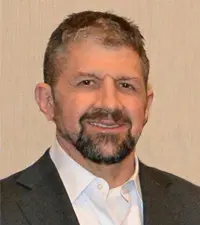
Andy Aiken
This's month's Member Spotlight focuses on PMSA Past President Andy Aiken, Commercial Assessment Lead, Pfizer. Andy served as President of the association in 2009, and has continued to play a part in PMSA.PMSA: How many years have you been in the industry?
Andy Aiken: I've been in the industry for 15 years, and worked in forecasting and management science for seven years in other industries before moving to the pharma industry.
PMSA: What attracted you to the field?
AA: The problems we work on in pharmaceutical management science affect not only the revenues or profits of our employers, but also the productivity of health care providers and the state of public health. We have an opportunity to help bring better therapies to market. The social value of the work is a motivator for me.
In regard to management science as a field, I enjoy problem solving and working with bright people. The work requires a very practical focus, as well as subject matter expertise and ongoing research on methodological best practices. It's a stimulating blend of application and intellectual exploration.
PMSA: How did you first hear about PMSA?
AA: I was recruited to the industry by Shawn Sahebi, who was Vice President of PMSA at the time. Shawn encouraged me to come to the conference and apply for positions on the board.
PMSA: How many years have you attended the PMSA conference?
AA: I've attended 14 conferences since 2002. I couldn't attend in 2012.
PMSA: Do you have any recommendations to make PMSA more effective?
AA: PMSA has made big strides since I joined as a member. Surprisingly, I still meet people within the industry who are not familiar with PMSA, even though they could benefit from joining and attending conferences and other events. So, increased marketing efforts may make the organization more effective.
PMSA: Please describe any current projects you are excited about.
AA: I'm currently working on several projects to enable commercial decision makers to conduct high-quality analytics somewhat independently of the analytics and insights teams. This effort has posed design and methodological challenges, and the solutions incorporate recent thought leadership in forecasting, adapted for Pfizer's organizational structure and culture.
PMSA: Do you have any predictions for the future?
AA: The global economy has been in a productivity slowdown for nearly a decade. The positive effects of information technology have been incorporated into the economy, and the economy has been drifting without significant growth drivers.
My prediction is that if the regulatory and pricing environment do not become too negative for the industry, biopharma will be one of the leading boom industries for the next few decades. It is a good industry to stay in, but the next few years will continue to be difficult.
PMSA: What are your hobbies?
AA: Reading (history, psychology, and economics) and travel.
PMSA: Thanks, Andy!
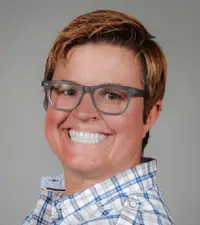
Christy Gaughan
This's month's Member Spotlight focuses on Christy Gaughan, Senior Director, Marketing Science, Genentech.PMSA: How many years have you been in the industry?
Christy Gaughan: I started doing promotional effectiveness work at Campbell Soup Company just shy of 20-years ago. From there, I became a Biostatistician doing medical research at University of Pennsylvania. After that, I spent 3-years at IMS Health, and I’ve been at Genentech now for 9 years.
PMSA: What attracted you to the field?
CG: I believe that strong business decisions are made with guidance from objective, data-driven analytics. The Marketing Science function sits at the very heart of advanced analytics, strategic agility, and influencing business decisions. The intersection of all three of these is a sweet spot for doing the things I am passionate about.
PMSA: How did you first hear about PMSA?
CG: I first heard about PMSA while I was at IMS Health, but I first attended PMSA 7 years ago, when I joined the Marketing Science team at Genentech.
PMSA: How many years have you attended the PMSA conference?
CG: Four. I’ve tried to attend every year, but, some years, work commitments have gotten in the way. I really wanted to attend last year, but I needed to be in Paris for a meeting, and there was no way for me to fly from Las Vegas to Paris in time.
PMSA: Do you have any recommendations to make PMSA more effective?
CG: Spend time talking to people. The real meeting takes place through interactions with each other, through us being curious with each other, to better help our patients. We become stronger by connecting the dots between projects and analysis, to see new ways to look at and solve problems.
PMSA: Please describe any current projects you are excited about.
CG: While I don’t view this as a project, the part of my job that gets me out of bed, energized, each morning is developing the people on my team to be strong leaders. I believe that people with strong math skills, or “Math Geeks,” like myself, make strong leaders. My passion really lies in unlocking those leadership skills, whether it is an individual contributor that needs help being more influential, or a new front line manager giving critical feedback for the first time, or someone that just took over a 15- person team and is developing their own identity. I am truly amazed and humbled by how much growth takes place across my 60-person team over time.
As far as projects go, some of the exciting things that my team is working on are:
- The launch of a new analytical platform that leverages big data technologies, that is reducing data management for my team and that is unlocking our data for some of our non-programming, analytical peers through visualization tools
- A newly developed marketing mix methodology to better inform resource allocation at all levels of the organization, across all of our brands
- Explorations into new data sources, like EMR data
PMSA: Do you have any predictions for the future?
CG: I truly believe that the work that a Marketing Scientist does helps our patients. With the recent explosion of big data technologies, there are so many possibilities to bring together analysis and just do really cool analytics. I’m also excited by the advancement of the breadth of skills that people with advanced analytical skills have. One of my favorite books is Daniel Pink’s Whole New Mind. In this book, he writes about how just having strong analytical skills is no longer sufficient. We need to be able to synthesize all of this information into stories that connect with our stakeholders. I agree, the combinations of these skills are absolutely critical. It has been fun watching this unfold across our discipline. I believe that all of this will help our industry get the right therapies to the right patients for the right costs.
PMSA: What are your hobbies?
CG: I have a lot of ways that I like to spend my time outside of work: cycling, hiking, SoulCycle, dinner with great conversation and friends, reading a lot of non-fiction, meditation, attempting to snowboard, traveling, and just spending time with my wife Melissa and dog Gladyce.
PMSA: Thank you, Christy!

Scott Hull
This month's spotlight focuses on new PMSA Board member Scott Hull, Director, Advanced Analytics, at Takeda. He works with stakeholders by applying modeling techniques to solve business problems, and his key role and passion is as an Analytics Translator and a leader of Data Scientists.PMSA: How many years have you been in the industry?
Scott Hull: I have been in the pharmaceutical industry for 28 years.
PMSA: What attracted you to the field?
SH: I had several friends who were Pharmaceutical Sales Representatives and they heavily recruited me. I fell in love with the industry and the business of healthcare.
PMSA: How did you first hear about PMSA?
SH: In 2000, I left Sales and moved into Analytics, and colleagues introduced me to the association.
PMSA: How many years have you attended the PMSA conference?
SH: I have attended four PMSA conferences to date. As my roles advanced in the Analytics area, my interest in the association increased.
PMSA: Please describe any current projects you are excited about.
SH: I am currently interested in using machine learning to predict a product’s sensitivity to Medicare Part D, and analyzing sunshine data for our rare disease products. I am also exploring the impact and control of healthcare systems, HCPs and patients.
PMSA: Do you have any predictions for the future?
SH: We need more Analytics Translators. They help ensure that organizations achieve real impact from their analytics initiatives (which has the added benefit of keeping data scientists fulfilled and more likely to stay on, easing executives’ stress over sourcing that talent).
We need to get better at storytelling with our data. Our stakeholders are typically less analytical, and careful attention to the story in the data is more important than ever.
PMSA: What are your hobbies?
SH: I enjoy playing golf with my son, reading books by Brad Thor and Tom Clancy, and PC gaming.
PMSA: Thank you, Scott!
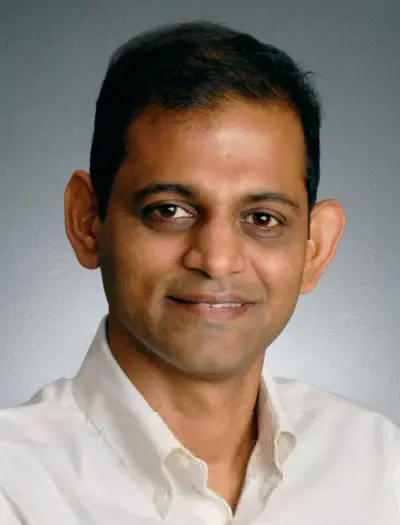
Srihari Jaganathan
This month's spotlight focuses on Srihari Jaganathan, UCB, in recognition of the contributions he has made to the field. Srihari was awarded the Best Podium Presentation award at the PMSA 2017 Annual Conference. Srihari was also recently awarded a Gold Medal by the Academy of Managed Care Pharmacy at their 2017 conference for his work in demonstrating that the nursing intervention program he helped develop has simultaneously improved adherence and reduced health care and hospitalization costs. The nursing intervention program is used by several hundred physicians and several thousand patients across the country. He is one of the first researchers to have linked claims data with a nurse intervention program to demonstrate the effectiveness of the program. His research focused on programs that control cost and improve outcomes. Srihari’s research has appeared in multiple peer-reviewed international conferences and Journals.PMSA: How many years have you been in the industry?
Srihari Jaganathan: I have been practicing analytics and forecasting, including pharmaceutical analytics, and operations research for over ten years. My primary responsibilities include advanced analytics, statistical modeling, and health economics and outcomes research, to make patients' lives better.
PMSA: What attracted you to the field?
SJ: After completing my graduate degree in engineering, with an emphasis on operations research, my very first job was in the pharmaceutical industry. Healthcare amounts to 1/6th of the US economy and it has several problems associated with rising costs and accessibility for patients suffering from chronic health conditions. There is tremendous opportunity to apply management science principles to help improve the lives of patients. This motivated me to start my career in this field.
PMSA: How did you first hear about PMSA?
SJ: PMSA is at the forefront of disseminating research critical to pharmaceutical analytics professionals. I learned about PMSA at the beginning of my career when one of my colleagues attended a conference, and ever since I have been closely following the conference proceedings.
PMSA: How many years have you attended the PMSA conference?
SJ: This is my first year attending the conference, and I look forward to attending many more.
PMSA: What did you enjoy the most about this year’s conference?
SJ: The PMSA conference is one of the premier conferences for sharing knowledge and the latest developments in the field of pharmaceutical analytics. Learning the current issues and practical applications is extremely helpful. I also enjoyed meeting some of the greatest minds in this field during the conference.
PMSA: How was the experience to present in front of the PMSA audience? Any advice for future presenters?
SJ: I felt honored to be selected to present in this highly competitive conference. I had a wonderful experience sharing some of the cutting edge research that we did to demonstrate the effectiveness of our patient intervention program that helped improve patient outcomes and reduce health care costs. This research was also recognized by the Academy of Managed Care Pharmacy. We received the Gold Medal at their 2017 conference, and I was thrilled to learn that I won the best podium presentation at this year’s PMSA conference. This sort of recognition from my peers is particularly gratifying.
PMSA: Please describe any current projects you are excited about.
SJ: I’m currently focused on generating real world evidence (RWE) on pharmaceutical intervention and demonstrating its effectiveness to the broad healthcare community, such as managed care organizations, health care practitioners and patients. I’m specifically excited because we can apply advanced research skills to these projects.
PMSA: Do you have any predictions for the future?
SJ: The Centers for Medicare and Medicaid services estimated that in 2015, national health care spending in the U.S. reached $3.2 trillion dollars or $9,990 per person1; at the same time, according to the Commonwealth fund report, in spite of the US spending far more than any other high income countries, Americans had poor health outcomes2. A 2011 Harvard Business Review article stated that a remedy for the cost crisis is to develop new ways to accurately measure the costs of health care and compare them with patient outcomes3. I personally think that this area will be front and center for the health care industry and the pharmaceutical industry specifically. Thus, PMSA and pharmaceutical analytics professionals are uniquely positioned to play a critical role in this space. Our research can be transformational in terms of healthcare spending and outcomes—this is one of the goals of my ongoing research, in particular.
PMSA: What do you like to do during your free time?
SJ: I enjoy reading books and cooking a wide variety of cuisines. I also like to spend time with my fast growing kids.
PMSA: Thank you, Srihari!
1 https://www.cms.gov/Research-Statistics-Data-and-Systems/Statistics-Trends-and-Reports/NationalHealthExpendData/Downloads/highlights.pdf
2 http://www.commonwealthfund.org/publications/issue-briefs/2015/oct/us-health-care-from-a-global-perspective
3 https://hbr.org/2011/09/how-to-solve-the-cost-crisis-in-health-care

Jing Jin
This month's spotlight focuses on PMSA Program Committee member Jing Jin, Sr. Manager, Business Analytics, at CSL Behring.PMSA: How many years have you been in the industry?
Jing Jin:I have been in the industry for 12 years. Early in my career as a statistician, I worked on primary research data modeling and forecasting for pharmaceutical companies, then I transitioned into the Pharma commercial analytics field. I worked for GSK for a couple of years and am currently at CSL Behring.
PMSA: What attracted you to the field?
JJ: I enjoy problem solving and I strongly believe in data-driven analytics and decisions. I have worked across many therapeutic areas and healthcare data assets, and I naturally developed a strong interest in pharmaceutical marketing science. I’m passionate about mining data and uncovering key insights that help commercial organizations make better decisions and, ultimately, to improve patient lives.
PMSA: How did you first hear about PMSA?
JJ: I first heard about PMSA in 2008 after my manager attended the annual conference and brought back material for the team to read and learn. Since then I have closely followed activities in the PMSA community.
PMSA: How many years have you attended the PMSA conference?
JJ: The last time I attended the conference was 2018, and I’m excited for the upcoming 2020 conference.
PMSA: Please describe any current projects you are excited about.
JJ: My passion always lies in translating data and analytics into actionable insights. It’s critical to bring to stakeholders the right level of analytics and insights that can be operationalized. There are a few areas I’m excited about in my current role:
- Promotion effectiveness measurement and investment guidance in rare disease markets that help optimize commercial resources
- Patient journey analytics that enable effective marketing and patient services
- Visualization/dashboards with timely and synthesized insights that can be accessible by cross functional partners, including marketing, sales, health care system teams, medical affairs and sales operation teams
I’m also very excited to be a part of the PMSA Program committee, to keep up and learn about cutting edge approaches and innovative solutions to solve a variety of business questions in the field.
PMSA: Do you have any predictions for the future?
JJ: The amount of healthcare data will continue to grow exponentially along with technology and digital transformation. Rigorous industry regulations and data privacy laws will create challenges and opportunities for marketing science communities. It is critical to put appropriate resources in place for data integration and management, which will allow more effective application of machine learning and advanced analytics. Real time personalized marketing will be within our reach, and it is exciting for marketing science professionals to continue to learn and add value to the evolving industry.
PMSA: What are your hobbies?
JJ: I love outdoor activities. I enjoy running regularly, hiking, skiing, paddle boarding, biking and traveling with my husband and daughters.

Danny Kinney
For our Spring 2016 Spotlight, we are focusing on PMSA Annual Conference keynote speaker Danny Kinney, Vice President, Global Business Intelligence, Sanofi. We asked Danny for his take on the state of the pharma commercial analytics industry.PMSA: What are the biggest barriers that pharma commercial analytics functions have right now?
Danny Kinney: It is a particularly exciting time to be an analytics professional – in any industry, and certainly in pharma. It’s the era of big data, technology is delivering increasingly powerful tools and capabilities to extract insights from data, and insights and analytics are becoming real-time (look at Google Analytics). The rest of the world is catching up to what we have been trying to tell them – the intelligent application of data and analytics to a growing range of business problems is critical to maximizing company success.
Interestingly, I don’t think that the biggest barriers facing commercial analytics functions today have much to do with the analytics themselves – as in how to tackle a given business problem, or what modeling approach to take in a given situation. The biggest barriers more frequently have to do with operationalizing analytics – ensuring value-adding analytics are enabled and consistently applied to the full set of company decisions and process that would benefit by them.
Admittedly, that’s kind of a big bucket. Sometimes the barrier is the availability of the right data, either within the company or to the analytics team. Sometimes it is in the data infrastructure or supporting processes to ensure data are high quality, analytics-ready, and repeatable. Sometimes the barrier is related to organizational or human issues, so that analytics applied and refined in one business or geography are not applied more broadly for any number of reasons.
PMSA: What is the one thing that pharma commercial analytics functions could be doing a better job at?
DK: Commercial analytics functions everywhere should have a short-, medium-, and long-term vision and plan for the growth of their function, and how they will deliver increasing value to their company through the growing number of company decisions that can benefit from data-based decision-making and thoughtfully applied analytics. This plan should prioritize the types of analytical work the group is undertaking, the brands or geographies they are supporting, and should specifically include plans to overcome barriers to operationalizing analytics.
PMSA: How are the manufacturers adapting to availability of big data tools to be effective and efficient in answering complex business questions?
DK: As with other aspects of analytics, pharma manufacturers have tended to lag other verticals in the adaption and application of new technology, and I think big data tools represent another example of this. Of course, this doesn’t apply universally, but on the whole, some of the most widely used and leveraged data assets for driving business insight are structured data, and aren’t all that “big.”
Not that this is a bad thing. Rather, I think it provides pharma manufacturers an opportunity to identify and leverage technologies and tools that have been forged and field-tested in other industries – internet, social, etc. – and to apply them once they have become more established, de-risked, and stable. Perhaps still cutting edge, but not bleeding edge.
And it’s a good thing that this opportunity exists, because everyone is being influenced by what has become possible during the era of big data – although volumes and types of data are exploding, expectations of what’s possible and over what time frame are collapsing.
PMSA: What do you see in the near future for manufacturer in-house commercial analytics teams as more data becomes available and off-shoring becomes more prominent for the analytics world?
DK: For a number of years, megatrends in globalization and data management and analytics technology drove significant opportunities to take analytics work that was once done exclusively in-house or with on-shore partners and move it off-shore. And these trends in globalization and data management and analytics technology remain firmly in place – data moves increasingly easily, technical skills become more readily available, analytical skills and training are unquestionably global. And the number of potential off-shore partners has grown in step.
But I think that these trends have gone so far as to have gone beyond another inflection point, and change the nature of what was once a “one-directional trade”. Today, it is just as likely that an analytics process that utilizes large data management teams, established data infrastructure, and expensive analytical software packages and servers could be performed by a dramatically smaller team (or an individual) using open source software and cloud-based data hosting and management. In places within our company, we have re-on-shored processes and activities that had been moved previously - lowering cost, accelerating cycle times, and increasing capabilities in the process.
I view this abundance of approaches to operationalizing analytics today as another key competency that companies should expect from their in-house commercial analytics teams – not only what analytics can and should be applied to business problems, but what the optimal approach is to executing (and yes, operationalizing) the analytics given the many different available approaches.
PMSA: Thank you for taking the time to share your thoughts with us.

Ewa Kleczyk
This month's spotlight focuses on PMSA Journal contributor and 2017 conference presenter Ewa J. Kleczyk, Symphony.PMSA: How many years have you been in the industry?
Ewa J. Kleczyk: I have been in the industry for over 12 years.
PMSA: What attracted you to the field?
EJK: Having my doctorate degree in Economics allowed me to look for careers in many industries, as the skill set can be applied to vast areas, such as government work, health economics, finance & banking, and market research. Due to my deep belief in the importance of healthcare to the sustainability, prosperity, and economic growth of a country, I looked for opportunities that would allow me to get involved in industries related to this area.
PMSA: How did you first hear about PMSA?
EJK: I learned about PMSA from a former colleague of mine, who recommended that I attend the conference, as it would be beneficial to my professional development, networking, and career progression.
PMSA: How many years have you attended the PMSA conference?
EJK: I have been to the conference three times over the years. The 2017 PMSA Conference will be my fourth, and a second time presenting at the event.
PMSA: Please describe any current projects you are excited about.
EJK: Insights from healthcare claims data have been leveraged for many years in aiding the decision making process for optimizing marketing and sales resources. However, to fully utilize the breadth and depth of the data, we have started applying machine learning techniques to provide an effective and precise way of exploring the high dimensional patient level claims datasets to help identify therapy starts and changes. Leveraging expanded machine learning insights and findings can aid brand managers by providing more exact and refined optimization of sales and targeting strategies and resources, as well as their deployment timing.
PMSA: Do you have any predictions for the future?
EJK: This is an interesting question. With the Affordable Care Act and most likely with the newly proposed American Health Care Act, the trends are moving towards patients having a greater involvement in their healthcare decisions. This is not only due to existing or upcoming policies shifting the decision-making process, but also due to the vast amount of information that is easily available for patients to access at any point in time. Physicians are no longer the only decision makers in patients’ care. Rather, they should work along with their patients and insurance providers to optimize the treatment algorithm. With these changes, marketers are also altering how they approach patients, what information is available for decision making, as well as the optimal timing and resources available for reaching patients to inform their decision-making process.
PMSA: Do you have any professional advice you would like to share?
EJK: Often when mentoring young professionals, my most valuable advice to those starting their careers is to be passionate and patient, to take initiative, to network, and to prioritize their professional and personal goals. Passion for the performed work drives motivation and patience. Prioritization allows for setting realistic and attainable goals. Taking initiatives aids stepping out of one’s comfort zone, and lastly, networking allows for developing professional relationships outside of the place of work.
PMSA: What do you like to do during your free time?
EJK: My husband and I love going for long weekends to Maine. My husband grew up there, so the state has a special place in our hearts. His family owns a lake estate where the entire family gathers and celebrates holidays, as well as spends summer weekends at. I love to sit by the lake, watch the water and trees, and just relax by a bonfire.
PMSA: Thanks, Ewa!

Shubham Lahoti
This month's spotlight focuses on Shubham Lahoti, Axtria, who recently was awarded the Best Poster Presentation Award at the 2018 PMSA Annual Conference.Shubham Lahoti has more than 11 years of experience in analytics, modeling, and technology projects with close to 6 years in sales and marketing optimization in the pharma industry. Shubham has managed several sales force analytics projects that involve multi-channel promotional analysis and optimization. He holds a bachelors degree from IIT Bombay.
PMSA: How many years have you been in the industry?
Shubham Lahoti: I have been in pharma analytics for more than 6 years. Prior to that, I have worked in insurance analytics and telecom for 5+ years.
PMSA: What attracted you to the field?
SL: I was always good with numbers and patterns; hence, analytics was a natural career choice for me. After working in a couple of industries, I got a chance to work in pharma. The exciting thing about the pharma industry is that the work I do makes real change in the lives of people. The choices we make directly or indirectly significantly impact others and it gives you satisfaction that you have done something meaningful.
PMSA: How did you first hear about PMSA?
SL: I heard about PMSA after I joined Axtria.
PMSA: How many years have you attended the PMSA conference?
SL: This year (2018) was my first time at PMSA. And, it was really a great learning experience!
PMSA: Please describe any current projects you are excited about.
SL: I am applying unsupervised machine learning in analytics projects specifically focusing on multi-channel response measurement and optimization. The aim is to build models that can provide real-time insights with minimal human supervision and eventually, expedite the decision-making process.
PMSA: Do you have any predictions for the future?
SL: It is no secret that the data is exploding and everyone wants to use that data for insights. Use of machine learning, AI, and other unsupervised analytics techniques to gather insights will become common, and business consumers will expect a quicker implementation of those insights. I foresee significant investment in developing better data management and integration capabilities from multiple data sources. It will then not only assist the state-of-the-art modeling exercises but also assist pharma companies in making dynamic personalized marketing decisions.
PMSA: What do you like to do during your free time?
SL: Out of my ‘n’ number of interests, one that is the oddest & oldest is my habit of collecting matchboxes. I have more than 2,000 unique matchboxes. But, with the advent of lighters as well as fewer people smoking, it is becoming increasingly hard to get new additions to my collection!
PMSA: Thank you, Shubham!
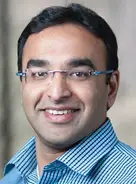
Shreyas Murthi
Our inaugural edition focuses on Shreyas Murthi, Associate Principal, ZS Associates. Shreyas’ presentation at the 2015 PMSA Conference was voted best abstract presentation by attendees, for his talk "Micro Targeting in Orphan Markets: A Patient Focused Approach and Case Study". We caught up with Shreyas this summer to learn more about his professional background and to hear his predictions for the future, and plans for visiting the seven wonders of the world.PMSA: How many years have you been in the industry?
Shreyas Murthi: I have been in the industry for over 10 years now. I started off on the east coast working with larger pharmaceutical companies, then focused on launch commercialization for emerging biotech companies in the Bay area, and I am now mainly focused on helping with commercial analytics for mid/large biopharma companies.
PMSA: What attracted you to the field?
SM: While finishing my Masters, I worked at an animal bioinformatics lab for 2 years which peaked my interest in the world of healthcare and pharmaceuticals. Healthcare consulting seemed liked a good way to accelerate my learning in this space and build expertise, and that’s how my journey started.
PMSA: How did you first hear about PMSA?
SM: ZS and PMSA have a long history of collaboration and sharing new ideas with industry professionals. I was referred to PMSA by several team members at ZS and my clients, when we were discussing the latest practices in using patient level data for commercial decisions.
PMSA: How many years have you attended the PMSA conference?
SM: 2015 was my second year attending the conference. I attended the winter symposium a couple of years ago as well.
PMSA: What did you enjoy the most about this year’s conference, besides your own presentation?
SM: I was very interested in this year’s theme of big data analytics, and enjoyed the diversity of topics discussed, including some interesting new ideas on how the industry can push for standardized unique identifiers across data vendors. It was also great to have multiple opportunities to network with other industry professionals – I particularly like the design of the exhibit/poster areas, and of course the dinner cruise!
PMSA: How was the experience to present in front of the PMSA audience? Any advice for future presenters?
SM: I have a lot of regard for the industry professionals who attend PMSA, and it was very exciting to present in front of that audience for the first time. Especially since I was the last speaker on the last day of the conference, and I assumed it would be challenging to keep the audience engaged. But I was pleasantly surprised by the attendance and the questions I got after the session. In terms of advice for future presenters – there is a wide spectrum among the PMSA audience. There are those who want more technical details of the approach/algorithms and those who are looking for a broader understanding and the impact they can bring to their organizations. It is important to strike a good balance, as well as to use the conference time outside of your presentation, to connect with particular individuals and answer specific questions.
PMSA: What are some current projects you are excited about?
SM: I am currently helping one of my clients build a cross functional advanced analytics platform using big data technologies. This project sits at the perfect intersection of predictive analytics, big data and change management – all the areas which I have been passionate about in the last couple of years. All of us in pharma know how challenging it is to quickly do high quality analytics. Without the right data available or the right technology, we end up spending more time preparing the data then doing analysis! I am excited to be in the middle of this journey to develop the next generation of analytical processes to guide commercial decisions – faster, deeper and better!
PMSA: Do you have any predictions for the future?
SM: I predict that industry consolidation among providers and payers will continue to shape how we evolve our customer engagement model and supporting analytics. New emerging data sources, such as EMRs, social websites etc.., will get utilized by pharma sooner than expected, within the next 1-2 years. And, the 49ers will win the 2016 Golden Super Bowl!
PMSA: What are your hobbies outside of pharma analytics?
SM: For now, I spend most of my free time with my wife and our 16-month old son! We love travelling and exploring new cities around the world – one of our goals is to visit all the 7 modern wonders of the world. We have visited 4 of them, and are really looking forward to experiencing the remaining ones in the near future!

John Qu
This month's spotlight focuses on PMSA Research Committee member John Qu, AD Product Analytics, Neuroscience, Strategic Insights & Analytics, at Novartis.PMSA: How many years have you been in the industry?
John Qu: I have been in the healthcare industry for over 6 years, and prior to that I spent 6 years in academic research developing novel bio-engineered materials.
PMSA: What attracted you to the field?
JQ: The dream of developing novel therapies to save patient lives has always fueled my passion for research. After having conducted basic biomedical research in a laboratory, I realized the path to bring a new therapy to the bedside involves more than just scientific rigor alone. By making a career move to commercial analytics and data science, I have been able to apply my research and engineering mindset to solve complex business problems, and at the same time gain a greater understanding of the complex dynamics involved in bringing a therapy to market.
PMSA: How did you first hear about PMSA?
JQ: A PMSA board member and mentor first introduced me to PMSA years ago and encouraged me to attend and become an active participant.
PMSA: Please describe any current projects you are excited about.
JQ: Currently, there is no standardization in diagnosing secondary progressive multiple sclerosis (SPMS) patients, which is a rare condition. We are developing a data-driven prediction engine based on machine learning algorithms to identify medical characteristics and lifestyle behaviors that will enable us to develop the right assets to engage the right patient, in the right office, and at the right time.
PMSA: Do you have any predictions for the future?
JQ: The healthcare industry will continue to evolve from blockbusters to personalized medicine intended to be most effective in smaller patient sub-populations, and eventually, tailored for the individual patient. Successful integration of massive patient datasets and implementation of machine learning to mine these data to augment human decision making will undoubtedly become a key competitive advantage in the development and commercialization of new therapies.
PMSA: What are your hobbies?
JQ: I enjoy spending time with family, traveling, running, and movies.

Jessica Santos
This month's spotlight focuses on frequent PMSA presenter Jessica Santos, PhD, CIPP, Global Compliance and Quality Director, Health Division, at Kantar.PMSA: How many years have you been in the industry?
Jessica Santos: I first got into research during my PhD days, so it’s been over 20 years now. I started in academia first, then moved to industry for commercial data analytics. Now, I specialize in compliance, privacy, and quality management for a large data company, Kantar.
PMSA: What attracted you to the field?
JS: I am always curious about the world and have a fascination with data—specifically, how to interpret, process, and manage data, plus the evidence-driven decisions and strategies made upon it. The days of handling scarce, fragmented, or outdated data are gone. We are in a big data era now, which means we are facing problems that come with too much quantity, inconsistent quality, and inaccurate data silos with shadows of privacy violations on our heads. I am still captivated by the data science field, but it can be overwhelming at times.
PMSA: How did you first hear about PMSA?
JS: A colleague of mine invited me to be his co-presenter in 2017. I have been presenting in PMSA almost every year since.
PMSA: How many years have you attended the PMSA conference?
JS: Only three years ago, but it feels a lot longer. I am very close with the PMSA group and what it entails.
PMSA: Please describe any current projects you are excited about.
JS: Big Data and Big Privacy: Since the beginning of the millennium, the global privacy landscape has undergone dramatic changes. In one regard, data is now viewed as an asset, commodity, or even a hard currency that organizations must possess; in another regard, data subjects and regulators are placing increasing demands on data privacy that organizations must adhere to in order to avoid personal data violations.
There's no universal consistency on the principles of data protection or how personal data is handled, so differences in how privacy is interpreted is largely based on the founding principles of individual countries and regions; this drives legislation and thus, enforcement actions.
Will privacy kill the data analytics field? Or will the Big Data giant make us reshape privacy priorities (especially surrounding what we see with COVID-19 right now)? Will our industry survive and thrive, or change and adapt?
PMSA: Do you have any predictions for the future? Any thoughts on the effect of COVID-19 on the industry?
JS: In the last four months, COVID-19 has forced the world through dramatic changes regarding privacy. On one hand, privacy legislations have not been officially relaxed. On the other hand, many may argue that using contact tracing apps or sharing personal data may provide the best ways to reopen our economies until we eradicate COVID-19 completely. Are we willing to trade a fundamental human right of privacy—which we have fought to preserve for decades—for an authoritarian control that may deliver more secure health? Will we want our privacy back after this pandemic? If so, will it even be possible to regain? While companies must still comply with ever-tightening privacy legislation, we’re also watching our government enjoy special exemptions without much consequence.
Our world will not be the same as it was in 2019. I dare to predict some trade-off will happen between big data collection/analytics with totalitarian privacy constraints—but by whom, to what end, and for how long? That will be an interesting space to watch.
PMSA: What are your hobbies?
JS: I love playing piano and sports. Rowing is my favorite—I enjoy the psychological tranquility, mental focus and physical exhaustion that comes from rowing on the Cambridge River with my teammates. I also like to travel around the world to experience different cultures and discover how both different and similar humanity is.
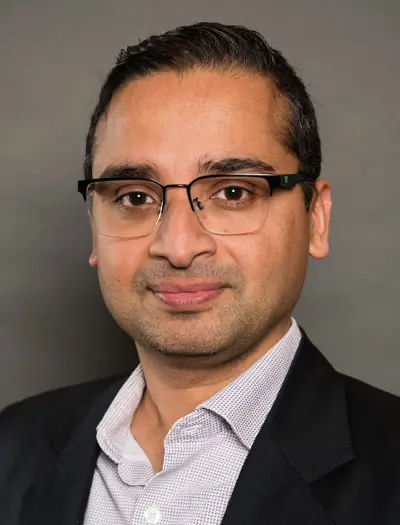
Mehul Shah
This month's spotlight focuses on Mehul Shah, Director, Performance Management & Analytics (DCV Business Unit), at Sanofi US. Mehul provides brand performance and reporting support to Executive LT, analytical support on performance execution, and secondary market research support to brands. Mehul joined the Board of Directors of PMSA in 2018.PMSA: How many years have you been in the industry?
Mehul Shah: I have been in the pharmaceutical industry for 14 years.
PMSA: What attracted you to the field?
MS: At first, I would say nothing in particular drove me to the pharma industry after I graduated. As a matter of fact, I worked in the retail and communications industries prior to joining the pharma industry. But, working in the pharma industry has surely made me realize the tremendous impact that innovative drugs have on patients and their lives. Listening to patient stories, seeing tangible change that pharmaceutical drugs can bring to patient’s lives right in front of your eyes is such a fulfilling experience. Working on what you love for this fulfilling purpose is why I am still here.
PMSA: How did you first hear about PMSA?
MS: Seven years ago I heard about PMSA through my colleague, who was a PMSA member. I am surely thankful to him for opening the door of possibilities at PMSA.
PMSA: How many years have you attended the PMSA conference?
MS: I have attended PMSA for 5 years.
PMSA: Please describe any current projects you are excited about.
MS: As we all know, the use of AI/machine learning has been rapidly picking up in pharma in the last few years. While ML algorithms are extensively used for brand investment decisions, they are used less so in performance tracking. I am working on a module which can be deployed on demand by ABLs that essentially performs driver analysis locally, to understand promotional levers impacting HCP prescribing behavior. Findings of such analysis need to be presented in an intuitive way with storytelling features available in new BI tools to get more buy-in from the sales force. I am excited to work on this project as the objective of the project is to bring data science mainstream locally with the 1st line leaders of the sales force.
PMSA: Do you have any predictions for the future?
MS: I truly feel that we are on the cusp of tremendous change in the pharma landscape, as cheap data storage and high computing power are making things possible which previously were hard to achieve. Growing price pressure is putting downward pressure on pharma manufacturers' bottom-line, and leaders are motivated to use data science to their advantage to stay ahead competitively. This represents an amazing opportunity for all of us in marketing data science. We are collectively responding to this, and PMSA has brought the community together like never before.
PMSA: What do you like to do during your free time?
MS: I love outdoor adventurous activities (bungee jumping, skiing and sky diving). I also enjoy reading biographies and history books.
PMSA: Thank you, Mehul!

Asheesh Sharma
Asheesh Sharma, Senior Principal, Axtria, has 13 years of experience in healthcare, technology and business consulting, mostly focused on execution of large scale processes and advanced analytics. He is known in the industry for his passion for excellence, customer satisfaction and innovation. Asheesh has been involved with PMSA since 2008, and has been a featured presenter at PMSA webinars and annual conferences.PMSA: How many years have you been in the industry?
Asheesh Sharma: Thirteen years, with most of the time focused on commercial operations, process innovation and analytics.
PMSA: What attracted you to the field?
AS: My background is in Computer Sciences and General Management – the use of data driven analytics to support decisions or execute operations more effectively has always been exciting to me. My focus has been on scaling up innovative analytical platforms and products that would make a difference in commercial model execution. I found that the Life Sciences industry, with its ongoing changes, is a great area to bring in my contributions.
PMSA: How did you first hear about PMSA?
AS: I heard about the association through marketRx’s participation in PMSA. I continue to participate in PMSA with my current firm Axtria.
PMSA: How many years have you attended the PMSA conference?
AS: I have now attended 6-7 conferences.
PMSA: Do you have any recommendations to make PMSA more effective?
AS: I feel that PMSA’s board has always been able to structure conference agendas that are very relevant to the issues and challenges our industry faces. The conferences are a great venue for management sciences practitioners to learn from each other’s experiences, as well as from vendor best practices and innovations. It would be great if industry senior experts are invited to participate in forums that are more structured as open Q&A in smaller tracks, although I do find panels effective. Another idea could be for PMSA to have a collaborative social portal where members can post questions, discuss modeling approaches and start conversations with appropriate governance and compliance in place. These online outreach channels can complement the conferences and webinar series very nicely.
PMSA: Please describe any current projects you are excited about.
AS: My passion is Incentive Compensation and Reward Systems, and this continues to be a large part of my work today. My current projects are focused on IC designs and goal setting analytics that work better in organized customer group settings, integrated platforms that enhance IC designer’s productivity and enable better IC what-ifs, and advanced payout simulators that improve field engagement and motivation. I’m hopeful that this body of work will advance the frontier in best practices for IC.
PMSA: Do you have any predictions for the future?
AS: In our world, data is oxygen – it will continue to drive competitive advantage for firms as they react to the changing world. New sources of data will continue to expand and become mainstream, and open source specialty pharmacy data exchanges will appear. As our commercial models become more oriented around health outcomes and living services, we will see data flowing in from health devices and apps, adding to the richness of data. Big Data analytics will be in the toolkit for every management science professional. Vendors will come out with innovative subscription models for analytical apps. While this will power a better picture for brands, for Incentives we will face more issues with current models given our need to balance equity, litigation fears and complexity. However, I do feel that the current currency of sales as one of our key performance measures will continue to exist in the near future.
PMSA: What are your hobbies?
AS: I like to spend time with my family, read, and watch movies.
PMSA: Thank you for speaking with us!

Jennifer Soller
This month's spotlight focuses on PMSA Professional Development Committee member Jennifer Soller, Principal, Market Analysis & Strategy, at Genentech.PMSA: How many years have you been in the industry?
Jennifer Soller: I have been an analytics professional for nearly 30 years, with the last decade focused in Pharma.
PMSA: What attracted you to the field?
JS: I have always been a geeky numbers person, who enjoys identifying patterns and trying to find order in the chaos. I began my career as an econometrician at the Fed, then spent many years as a quant researcher at an investment bank. But as time went on, I got disillusioned with the idea of spending all of my time trying to capture the greed-driven, smoke-and-mirrors nature of financial market movements. Searching for more meaning in my work, I decided to focus my analytical skills on modeling customer behavior, and wound up in other industries, like gaming and banking. Moving into Pharma was really fulfilling, as I was able to ply my trade in benefit to society -- helping identify the most efficient and effective way to get impactful and important information to HCPs and patients.
PMSA: How did you first hear about PMSA?
JS: Most likely through some newsletter or published paper. I did (and still do) a lot of foundational reading to keep up with the market landscape, the competition, and the state of the industry.
PMSA: How many years have you attended the PMSA conference?
JS: The first PMSA conference I attended was back in 2011 in Miami. The next year, in 2012, I was a presenter in Anaheim. Since then, I've attended various PMSA symposia and conferences when my schedule allows. In 2018, I was a presenter at the PMSA European Summit in Amsterdam, and will be at the podium again at the 2020 Winter Symposium.
I find PMSA events a great way to get broader insight into the current state of our industry -- what people are working on and what might be the next new thing. And it is more than just the podium sessions -- I also really enjoy the networking opportunities that these events provide: reconnecting with past colleagues who have moved to different companies, picking the brains of the really smart thinkers in our field that I respect and trust, or just having a friendly methodology debate with JP over a glass of wine.
PMSA: Please describe any current projects you are excited about.
JS: We are doing some interesting, cutting-edge work using AI and machine learning to build patient prediction models, and to tease out common themes in field verbatims reporting. However, my personal focus has shifted to fostering an environment where analytics can make more of an impact. I am particularly energized by introducing metrics and measurement to teams not used to thinking that way, and helping analysts develop the communication and presentation skills they need to inspire and influence.
PMSA: Do you have any predictions for the future?
JS: I think that Medical Affairs orgs in Pharma are going to grow in importance and impact, as physicians and other stakeholders get more and more inured to promotional marketing and as personalized healthcare leads to the science within small patient subsets and rare diseases. I think that there is a big opportunity to use analytics to help Med Affairs allocate their energies most efficiently and effectively.
PMSA: What are your hobbies?
JS: I am an avid kayaker and am often out on the San Francisco Bay -- even in the winter! I also have just started playing the ukulele and participate in several uke jams and sing-alongs each quarter.

Tatiana Sorokina
This month's spotlight focuses on Tatiana Sorokina, Associate Director, Digital & Advanced Analytics, Novartis, who is currently serving as a member of the PMSA Marketing Committee.Tatiana leads Advanced Analytics for Oncology at Novartis and is focused on building scalable technology and driving automation in marketing. Tatiana has been developing machine learning and artificial intelligence solutions for the healthcare industry for more than 5 years. Prior to joining Novartis, she has run Parceed, an AI-based guidance system for medical students. Before starting her own company, Tatiana was a Head of Data Science at Prognos, a healthcare technology company that applies AI to clinical lab diagnostics. Tatiana holds M.Sc. in Advanced Analytics in Marketing from Columbia University and B.Sc. in Economics from Moscow State University. She blogs about data science and entrepreneurship at www.insightmine.com.
PMSA: How many years have you been in the industry?
Tatiana Sorokina: I have been in healthcare for 6 years with the majority of my experience being on the healthcare data and advanced analytics side.
PMSA: What attracted you to the field?
TS: I have always wanted to be in a field that is ripe for innovation. I felt like this would be a great opportunity for me to make a change for the better. That said, I wanted to make a change in the field that could have the biggest impact on people. Healthcare concerns every one of us, and innovation applied in healthcare may lead to big improvements in longevity and quality of life. I am humbled by the thought that I can contribute to this improvement.
PMSA: How did you first hear about PMSA?
TS: Through my former boss and my mentor. He has been in the pharma industry for over 30 years and is a big fan of PMSA. He is the one who introduced me to the PMSA family.
PMSA: How many years have you attended the PMSA conference?
TS: I have been coming to every PMSA conference since 2013. The only year I skipped was 2016, when I ran my own company.
PMSA: Please describe any current projects you are excited about.
TS: I love writing. When I first started in 2014, I mainly wrote about analytics and structured my blogs as hands-on case studies. When I became an entrepreneur I started writing about my startup life, so my blogs became a little bit more business-oriented, though they still focused on analytical themes as my company was a tech startup. Once I joined the pharma world, my blogs became more about building an analytically-driven culture, rather than about specific analytical problems. I am very pleased with the turns my blog took as I’ve progressed in my career. I am also very excited by an opportunity to expand content marketing efforts for PMSA through blogging. PMSA is such an amazing community for data scientists and analytically-minded marketers. There is a lot of great content that comes out of each conference which can be shared more broadly with the analytical community.
PMSA: Do you have any predictions for the future?
TS: I am a big believer in automation and on-demand analytics, especially in healthcare. With the tremendous growth in M&A deals in recent years, I think healthcare will further consolidate, opening an opportunity for key partners to establish common technology and seamless data connection streams, so that pharmaceutical companies don’t need to spend so much time acquiring, storing, cleaning and analyzing the data, but rather invest their efforts in uncovering insights that help their business to dynamically evolve.
PMSA: What do you like to do during your free time?
TS: As I mentioned earlier, I love writing and sharing my stories with others. I also really enjoy conducting various thought experiments, no matter how unrealistic or crazy they might sound. I’m pretty active and enjoy running, biking and hiking. I am also a big fan of road trips. My husband and I try to go on a road trip almost every long weekend.
PMSA: Thank you, Tatiana!

Nadia Tantsyura
This month's spotlight focuses on Nadia Tantsyura. Nadia serves as Sr. Associate Director, Data Strategy and Innovation (Analytics and Insights) at Boehringer Ingelheim. In this role, she leads innovative analytics projects in the areas of Market Access, Payor and Digital Analytics. Nadia is a member of the PMSA 2019 Conference Program Committee.PMSA: How many years have you been in the industry?
Nadia Tantsyura: I have been in the pharmaceutical industry for 14 years. My experience spans application development and data warehousing to advanced analytics.
PMSA: What attracted you to the field?
NT: I like solving problems. I started in IT, building data warehouses and designing data marts, and later was invited to join the advanced analytics group. It was the best career move that I could have made. I absolutely love working on complex problems looking for hidden information and patterns, and transforming raw data into useful and actionable business insights. Most importantly, I see that my work has real impact on the lives of patients.
PMSA: How did you first hear about PMSA?
NT: I wanted to learn more about emerging industry trends so I asked my colleagues for their recommendations. PMSA was their top choice.
PMSA: How many years have you attended the PMSA conference?
NT: This year will be my second year attending the conference. I enjoy connecting with so many bright people and bouncing ideas off each other.
PMSA: Please describe any current projects you are excited about.
NT: My focus this year is to deliver advanced analytics solutions to drive our Market Access and Digital strategies. We are building a data-driven decision-making tool to optimize our market access investments at both the state and national levels. We want to ensure that we have solid programs in place to help our patients get on and stay on therapy. To support the digital transformation journey, we will be focusing on owned channel optimization by finding cost-effective opportunities to engage target audiences and deliver personalized customer experiences by leveraging channel and content affinity data as well as learnings from A/B tests.
PMSA: Do you have any predictions for the future?
NT: I believe that there will be more innovative products with stronger efficacy profiles coming to the market and intense competition from generics. We should expect copay accumulator adoption in primary care as well as additional restrictions around the copay card programs. Pharma should prepare for and react to new pricing policies. Moreover, as the new industry trends emerge, the demand for data scientists will continue to grow. What makes data science so exciting is how fast it is evolving, so we have to continue learning to keep up. If you're not moving forward, you're falling behind.
PMSA: Thank you, Nadia!

Gellert Toth
This month's spotlight focuses on Gellert Toth, Senior Director - Advanced Analytics, Sanofi US, who recently presented at the PMSA 2018 Winter Symposium.PMSA: How many years have you been in the industry?
Gellert Toth: My first job at a pharma manufacturer was at Novartis, in 2000.
PMSA: What attracted you to the field?
GT: I was always intrigued by science, especially behavioral science that is based on statistics and math. The opportunities in pharma marketing have always been endless.
PMSA: How did you first hear about PMSA?
GT: I worked in a group at Sanofi that included marketing science, market research and some operations related functions. My colleagues working in marketing science were involved with PMSA.
PMSA: How many years have you attended the PMSA conference?
GT: The first PMSA conference I attended was in Las Vegas in 2008. I have not been to all the conferences between then and now but I try to go when I don’t have other work related commitments. I presented at three different conferences.
PMSA: Please describe any current projects you are excited about.
GT: I am very excited about channel and message optimization near real time. Predicting which channel combination and message will maximize the potential of a customer is a huge challenge but we now have machine learning that allows us to solve problems like this.
Getting the right data from various marketing partners is a challenge, and connecting that data is also difficult, but once done, the possibilities are endless.
PMSA: Do you have any predictions for the future?
GT: I am certain that personalized marketing to our customers is just around the corner. Machine learning will enable us to take concepts developed by companies like Google and Netflix and translate them into models appropriate in pharma.
PMSA: What do you like to do during your free time?
GT: I like to play and listen to loud music. If a guitar is plugged into an amplifier with some processors and a wah pedal, I will probably like it.
PMSA: Thank you, Gellert!

Nathan Wang
This month's spotlight focuses on Nathan Wang, Johnson & Johnson, who is currently serving on the PMSA Marketing Committee.PMSA: How many years have you been in the industry?
Nathan Wang: I have been with the pharmaceutical industry for 17 years. I started in advanced analytics at GlaxoSmithKline (GSK) in 2001 and rotated through a few functions in the commercial analytics field, such as forecasting, market research, and data management. Advanced analytics and market research are the two functions where I stayed the longest.
PMSA: What attracted you to the field?
NW: My background is in statistics. I am passionate about applying analytics to drive business impact. Stepping into the pharmaceutical industry was not planned. Looking back, I feel lucky that I joined this field. There has never been a lack of opportunities to drive business impact and I like the continued innovation in this field as well.
PMSA: How did you first hear about PMSA?
NW: When I first joined GSK, GSK was one of the leading sponsors of PMSA with colleagues serving on the board. We have been encouraged to attend PMSA regularly to build connections and stay on top of the evolution of the field.
PMSA: How many years have you attended the PMSA conference?
NW: I attended PMSA four times before moving into market research. I’ve returned to advanced analytics recently and joined the 2017 conference. It was great to see the new developments in this field and connect with industry peers.
PMSA: Please describe any current projects you are excited about.
NW: I am excited about the patient journey capability we are building. It maps out the emotional journey and the treatment pathway patients go through by integrating market research and real world data analytics. It helps us understand the decision points and treatment paradigm associated with a disease state and develop brand strategy around the identified key moments.
PMSA: Do you have any predictions for the future?
NW: The analytics function in the pharmaceutical industry will have more and more opportunities to drive impact. Most companies in the industry are facing or will face the challenge of competing with more competitors with reduced budgets. It is critical to continuously optimize resource allocation and improve promotion execution. Those are the areas where analytics can really add value. The ability to turn data into insights and drive decision making will continue to be highly valued.
PMSA: What do you like to do during your free time?
NW: I am a morning person. I get up early and start the day by running for two miles. It is a good habit my father started me on when I was little. I started practicing tennis with my 11-year-old son recently. We play a lot. I enjoy the exercise as well as the bonding time with my boy.
PMSA: Thank you, Nathan!
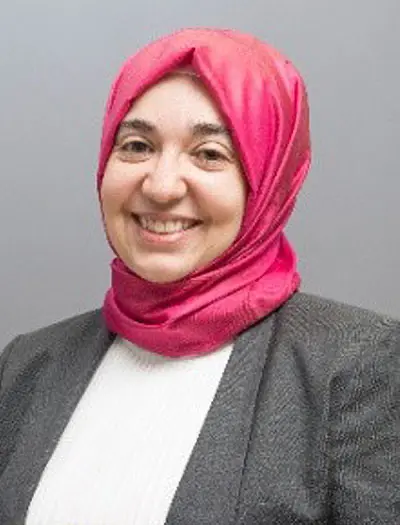
Nuray Yurt
Our second Member Spotlight focuses on PMSA Board member Nuray Yurt, Heron Therapeutics. Nuray joined the PMSA Board in 2015 and has been working on the program for the 2016 Annual Conference. We asked her a few questions about her history in the industry, and her thoughts on the future.PMSA: How many years have you been in the industry?
Nuray Yurt: I have been in the industry for almost 10 years. Prior to that, I spent five years in academia, specializing in health economics.
PMSA: What attracted you to the field?
NY: After moving to New Jersey for family reasons (New Jersey being the capital for pharma), and with much of my academic work being related to pharma, I joined the industry.
PMSA: How did you first hear about PMSA?
NY: I joined the industry through MarketRx, an analytics consulting company which later became part of Cognizant. I learned about PMSA during my time there.
PMSA: What are you goals for serving on the PMSA Board?
NY: Vendors and Manufacturers are partners. One must do well for the other to succeed. Successful vendor and manufacturer matching is important, and I think PMSA creates the environment for this. Vendors explore the issues that manufacturers are facing, and can therefore develop faster solutions. Manufacturers explore different thinking based on everyone’s experiences. This creates efficiency in the analytics space.
PMSA: Please describe any current projects you are excited about.
NY: The PMSA webinar series and the CUPID initiative are both exciting. Webinars are a very valuable learning tool in this fast-changing space. CUPID will exponentially increase the value of all the data out there, for everyone.
PMSA: Do you have any predictions for the future?
NY: Well, as an analyst it wouldn’t be right if I said no. We have to learn from history and predict the future. Given the growing volume of data, information, insights and analytics, I think PMSA will become more important for manufacturers to keep up with trends and for vendors to create solution-based offerings.
PMSA: What are your hobbies?
NY: I am a very social person. I like to mentor college students from different walks of life, mostly international young women. I spend a lot of time giving speeches to help support their adoption to the United States and their path to success. On top of this, I have three kids with busy lives, so driving is a mandated hobby.
PMSA: We are sure that your mentees are in good hands. Thanks, Nuray!